We are very excited to announce our three keynote speakers. They are Dr Nicholas Weise, Professor John Mitchell and Dr Nura Sidarus. There is more information about our speakers below. You can also download the full programme.
Wednesday 10.30-11am
Dr Nicholas Weise
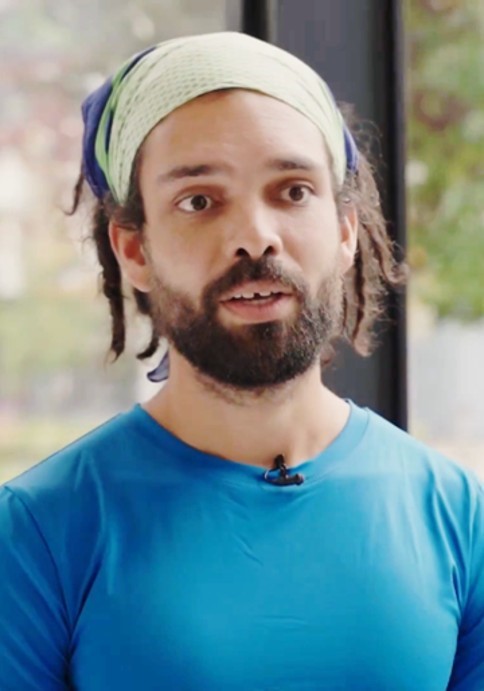
Title: Learners as Dual Experts: Partnership, Reward and Recognition
Abstract: Across the higher education landscape, students are involved as partners in learning, admissions, pastoral care and representatives of their peers. Despite comparable impact of these members of our community, there are many differences in parity of esteem between student partners and university staff. During this keynote we will explore the various ways in which students are partnered with at the University of Manchester, as well as ideas for reward and recognition of their efforts more widely.
Biography: Nick is a Principal Fellow of the Higher Education Academy holding joint academic positions in both the Manchester Institute of Biotechnology and the Manchester Medical School. He has served as Faculty Lead for Student Experience, Departmental Lead for Teaching & Learning Enhancement as well as Divisional Lead for the Scholarship of Medical Education. He is Academic Coordinator for three Peer Support schemes, each of which sees him working with a variety of student partners year on year. He was made a Full Member of the International Federation of NTF in 2024 and awarded the 2025 Teaching Excellence Award by the Biochemical Society.
Thursday 9.30-10am
Professor John Mitchell, PFHEA

Title: Project Based Learning as a tool to create an integrated curriculum
Abstract: STEM education faces a critical tension: disciplines demand deep connections, yet institutional processes enforce modularization. This fragmentation traps knowledge in isolated boxes, hindering the holistic understanding required to set our graduates apart and allow them to be the next generation of responsible innovators and leaders. In this talk I will look at how project-based learning can be used in creating an integrated curriculum that seeks to address this tension. I will use examples of the Integrated Engineering Programme (IEP) at UCL and other programmes to show how authentic experiences can be introduced, either by revolution or evolution, to support students in making vital technical and societal connections.
Biography: John E. Mitchell is Professor of Communications Systems Engineering, Head of the UCL Department of Electronic and Electrical Engineering, and Co-director of the UCL Centre for Engineering Education. Between 2012 and 2016 he was seconded to the UCL Engineering Sciences Faculty office, where he led the introduction of the Integrated Engineering Programme, a major revision of the curriculum across the engineering faculty. In 2018 he was part of the team awarded the HEA Collaborative Award for Teaching Excellence (CATE) and in 2024 he was awarded the Leonardo da Vinci Medal of the European Society of Engineering Education (SEFI). He has published widely on curriculum development, active learning and issues of diversity within engineering education. From 2015 to 2022 he was Vice-Dean Education of the UCL Faculty of Engineering Sciences. Professor Mitchell is a Chartered Engineer, Fellow of the Institution of Engineering and Technology (IET) and the Institute of Electrical and Electronics Engineers (IEEE), Principal Fellow (PFHEA) and National Teaching Fellow (NTF) of the Higher Education Academy, Immediate Past President of the Engineering Professors’ Council, and a former Member of the Board of Directors of SEFI, Vice-President Publications of the IEEE Education Society and Editor-in-Chief of the IEEE Transactions on Education.
Thursday 3.30-4pm
Dr Nura Sidarus

Title: Embedding Diversity and Inclusion in STEM Through Student Collaboration: From Curriculum Review to Expanding Opportunities
Abstract: Equity, Diversity, and Inclusion (EDI) in science and academia is vital to advancing our collective knowledge, as well as enabling the success of its creators, whether as researchers, educators, or students. This talk will review some initiatives at RHUL that exemplify how collaboration between staff and students can help improve our scientific and educational practices, and support student belonging and success. The Psychology department Undergraduate Research Bursary sought to widen access to research opportunities, and expand student collaboration in knowledge production, by standardising research assistant recruitment processes and mitigating inequalities in informational and financial barriers. Another initiative focused on decolonising and diversifying the Psychology curriculum, through an ongoing multi-year project. A team of staff worked in collaboration with student research assistants, alongside further student consultation through focus groups and surveys, to review the literature, audit our curriculum, and create a practical guide and infographic for staff on how to improve their teaching materials and practices. The PEer MENToring to Suceeed (PEMENTOS) initiative, run across the School of Life Sciences and the Environment, aimed to support first year students in their transition to university through mentoring by a more senior student, demonstrating the unique value of peer collaboration, especially for students from underrepresented backgrounds. I hope these examples may help inspire other educators to adapt them or develop their own collaborative initiatives to further embed diversity and inclusivity across STEM fields.
Biography: Nura is a lecturer in Cognitive Neuroscience in the Psychology Department at Royal Holloway University of London. Her research investigates how we monitor and feel in control of our actions and their consequences, decision-making and learning, and how these processes may be altered by mental health symptoms, like depression. She has additionally worked to promote Equity, Diversity & Inclusion (EDI) in academia, namely as chair of departmental EDI committees (ENS, Paris; RHUL), the RHUL Gender Equity Group, or the European chapter of Women in Cognitive Science+.

We are also delighted to host winners of the LearnSci Teaching Innovation awards at this year’s conference. Winners from the University of Brighton (UK), Rhodes University (SA) and KwaZulu-Natal University (SA) will showcase their award-winning projects.

